


A long walk or challenging workout can leave your legs feeling tired. But recurring leg pain during ordinary activities, such as walking through a store, climbing stairs or reaching the end of the block, may be a sign of something more serious.
Read More
Swelling in the legs is common, but its cause is not always easy to identify. Two conditions that are frequently confused are lymphedema and lipedema. Although they can produce similar symptoms, they affect the body differently and require an...
Read More.jpg)
A carotid ultrasound report can contain unfamiliar terms such as stenosis, plaque, PSV, EDV, and ICA. Although the language may sound technical, the purpose of the examination is straightforward: to determine whether the arteries supplying...
Read More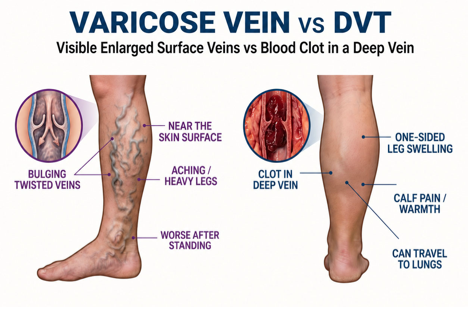
Leg pain, swelling, warmth, or visible veins can be concerning, especially when you are unsure whether the problem is a varicose vein or a blood clot.
Read More
When people are diagnosed with narrowed arteries or are told they have vascular disease, one of the most common questions they ask is:
Read More- 1
- 2
- 3
- 4
- 5
- Next Page »




_2.jpg)